


Nesscliffe Hills & the Cliffe
This is a place of big views, tall trees and even taller tales. Explore the hill fort, historic quarries, and a hidden sandstone cave.
Welcome to
Nesscliffe Hills & The Cliffe
Outlaws once hid here. Now it’s just you, the trees, and the view. Wander sandstone caves, climb to sweeping vistas, and walk where history sleeps.
There’s space to roam—70 hectares of woodland and heathland (that’s 140 football pitches, if you’re counting). Nesscliffe Camp, an Iron Age hillfort later claimed by Roman boots. Archaeologists from Oxford and Southampton dug deep here in 2001. They found stories buried in the soil.
A quiet corner of Shropshire, waiting to be explored.
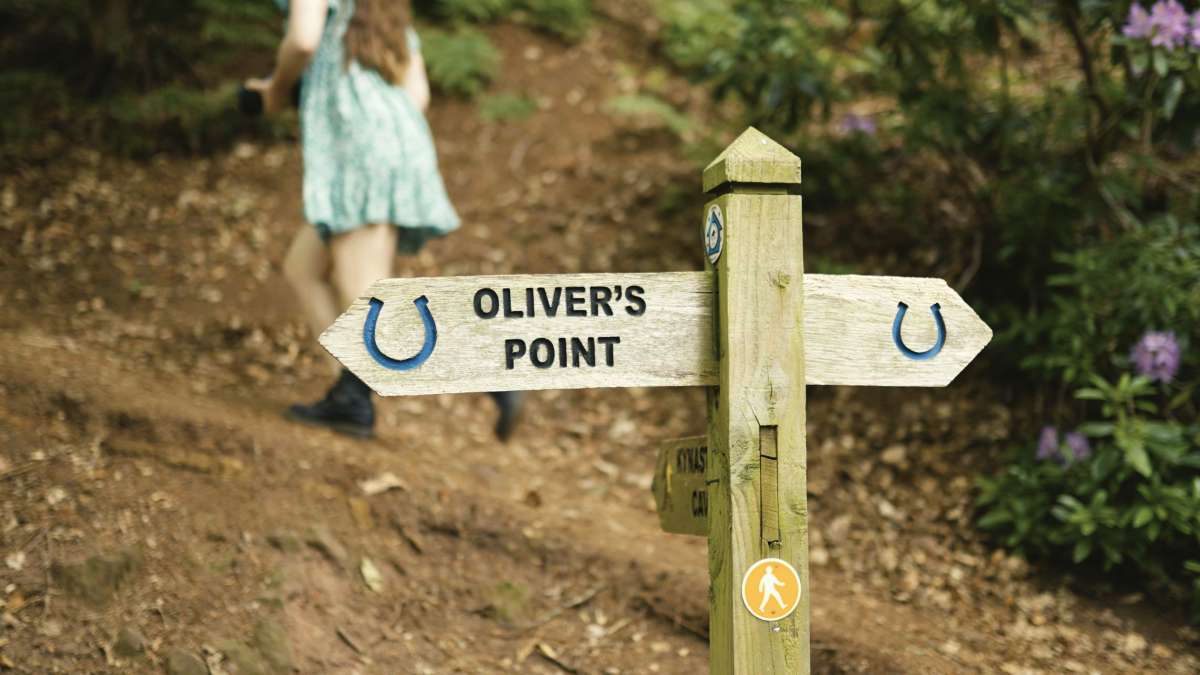

Skies that seem to go on forever. pause a moment to take it in.
Shropshire fields roll out like patchwork, stitched with hedgerows and winding lanes. Beyond them, the Welsh hills rise soft and blue on the horizon. On clear days, the view stretches for miles—layered ridges, quiet farms, and glimpses deep into Wales.
getting there & CAR PARKING
Parking is only permitted in the designated car parks. Please avoid parking on lanes and tracks.
There are 2 main car parks:
The Pines Car Park What3words
The Oaks Car Park What3words
Public Transport
There is a regular bus service (X5) between Shrewsbury and Oswestry that passes through Nesscliffe, get off at Old 3 Pigeons Pub, there is an entrance to the country park opposite. The Cliffe is close to Ruyton XI Towns which also has a bus service from Shrewsbury (576).
Beneath the trees and heath, history runs deep.
The Nesscliffe Hills and Cliffe Countryside Heritage Site spans 70 hectares of mixed woodland and lowland heath. The area includes two wooded hills and a heather-covered ridge of The Cliffe, offering panoramic views across Shropshire and into Wales.
Visitors can explore an Iron Age hill fort, sandstone quarries that supplied stone for local castles and churches, and a cave linked to the 15th-century outlaw Humphrey Kynaston. Evidence of human activity stretches back 3,000 years, with features like saw pits, WWII trenches, squatters’ cottages, and even a terrace once used for archery competitions.
The site’s natural diversity includes ponds, cliffs, and an unusually wide range of conifer species—almost an informal arboretum. The heathland, nationally rare, bursts into colour each August when the purple heather blooms. These varied habitats support rich wildlife, especially birds and insects.


Explore at your leisure
Things to see and do at Nesscliffe
Footpaths and bridleways weave through woods and heathland, winding gently or climbing steeply. It’s a favourite amongst walkers, cyclists, and horse riders—boots, wheels, and hooves all welcome. But please stick to the paths and bridleways.

Walking Trails
Waymarked circular routes provide a variety of walking routes. Three family-friendly walking routes have been designed at the site.

Horse riding
There are many bridleways around and across the site. The Humphrey Kynaston Way long distance route passes through and the Humphrey Kynaston Nesscliffe Circular is a promoted route within the site.
Cycling & Mountain Biking
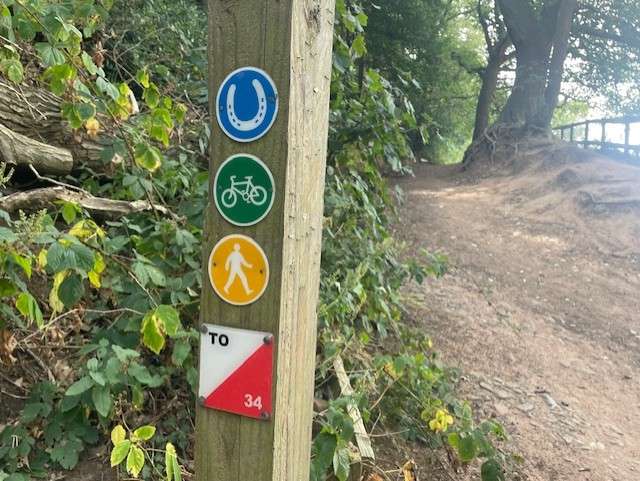
There are lots of cycling opportunities along bridleways throughout Nesscliffe & The Cliffe. Pease keep to the marked bridleways. Download the Cycling Map showing the bridleways as a hashed blue line.

Orienteering & Climbing
Nesscliffe Country Park is a popular destination with orienteering groups and climbing clubs.
The site has a permenant orienteering course.
Cycling & Mountain Biking
Cyclists are welcome at Nescliffe and the Cliffee but please stay on the way marked bridleways and respect other users and visitors to the country park.
Horses get spooked easily and cyclists are faster than walkers so it’s only fair to slow down, stop if necessary, smile, say hi and pick up speed once you roll past.
Fingerposts have been installed to help you stay on the bridleways, marked with green cycling signs.
You MUST NOT ride on: The Scheduled Ancient Monument— It is an offence to damage this Iron Age Hill- fort.
Orienteering & Climbing
Nesscliffe Country Park is the latest countryside site to have its own permanent orienteering course. The course has been set up by Wrekin Orienteering Group and consists of an easy (2.3km) and medium route (2.9km). The controls are 10cm square flat, red/white markers with letter codes on. Many, but not all, are on posts. More orienteering in Shropshire.
The site is an important climbing area, and the sandstone outcrops have a range of climbing routes on them which are recognised as being extremely challenging. For more information, go the British Mountaineering Council‘s website.


A view with a thousand stories
Humphrey Kynaston was by no means the first person to settle at Nesscliffe Hill. At the summit, large earthworks and other remains provide evidence of an Iron Age hillfort that dates back some 2000 years.
Read on to discover more about Oliver’s Point, Kynaston’s Cave and Nescliffe Hill Camp Escavation.
Oliver’s Point
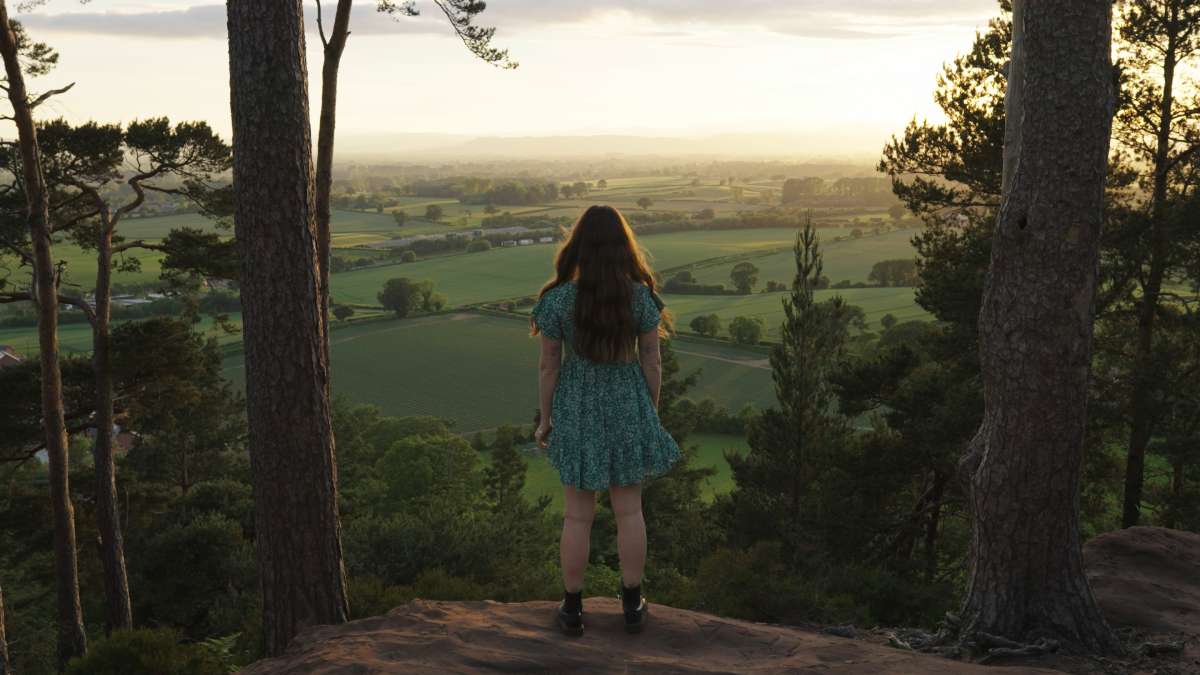
At the summit of Nesscliffe Hill Camp, Oliver’s Point offers one of Shropshire’s most captivating views. From this dramatic escarpment, the landscape unfolds across the middle Severn Valley, with Middletown, Breidden and Llanymynech hills rising in the distance. After heavy rain, you might spot floodwaters near the Vyrnwy–Severn confluence, and on clear days, the Cambrian Mountains of Wales appear on the horizon.
The name is thought to link to Oliver Cromwell, leader of the Parliamentarians in the English Civil War. Some say his troops carved cannon holes into the rock, though no evidence confirms it—leaving the tale to local lore.
Long before Cromwell, Iron Age communities used this rocky vantage point to guard their hillfort. Centuries later, the highwayman Wild Humphrey Kynaston is said to have watched for passing travellers from here.
By Victorian times, Oliver’s Point had become a place of leisure. Families came for picnics, archery, and dances under open skies. Even Lord Bradford and his household made the journey by horse and cart—drawn, like so many, by the timeless beauty of the view.
Kynaston’s Cave
Kynaston’s Cave sits high in the red sandstone cliffs—a Scheduled Monument carved into the quarry face.
Two chambers, reached by a steep flight of steps, once sheltered Shropshire’s own outlaw, Humphrey Kynaston, and his horse Beelzebub.
It’s not safe to enter today, but you can explore it in the virtul tour below and follow their legend through the stone.

Nesscliffe Hill Camp Excavation
Nesscliffe Hill Camp stands as one of Shropshire’s most significant Iron Age hillforts, built around 500 BCE. Its stone-lined guard chambers still mark the entrance passageway—solid, silent reminders of ancient defence.
The fort was once protected by deep ditches and broad earth banks, some stretching four metres wide. These impressive earthworks, long hidden beneath woodland, are now clearly visible thanks to recent tree clearance.
Across the site, archaeologists have also uncovered signs of possible roundhouses—hints of everyday life from centuries past.
A series of excavations has begun to reveal the secrets of this remarkable place, though each discovery seems to spark new questions. In 2021, teams from Southampton and Oxford Universities explored one of the main entrances to the inner fort, peeling back layers of history and shedding light on how the site evolved over time.
Then in 2022, a striking find emerged from the rubble of the guard chamber—a piece of rock art believed to depict a Roman god, possibly linked to the local Cornovii tribe, known as “the horned ones.” Alongside this, charred cereal remains and evidence of small-scale iron working suggest that the site was later occupied during Roman times, likely as a domestic settlement.
You can explore the dig for yourself through the interactive walkthrough videos below. Wander through the site, zoom in on key features, and tap icons to uncover stories etched into the landscape—each one adding a new thread to Shropshire’s rich archaeological tapestry.
Step into the story of Nesscliffe Hill Camp with this lively illustrated walkthrough. Packed with character and charm, the cartoon brings the archaeological dig to life—layer by layer, discovery by discovery.
From Iron Age ramparts to Roman relics, each frame reveals the secrets unearthed beneath Shropshire soil. It’s a playful yet informative journey through time, inviting curious minds of all ages to explore, learn, and imagine what life once looked like atop the hill.

Volunteer at Nesscliffe Country Park & the Cliffe
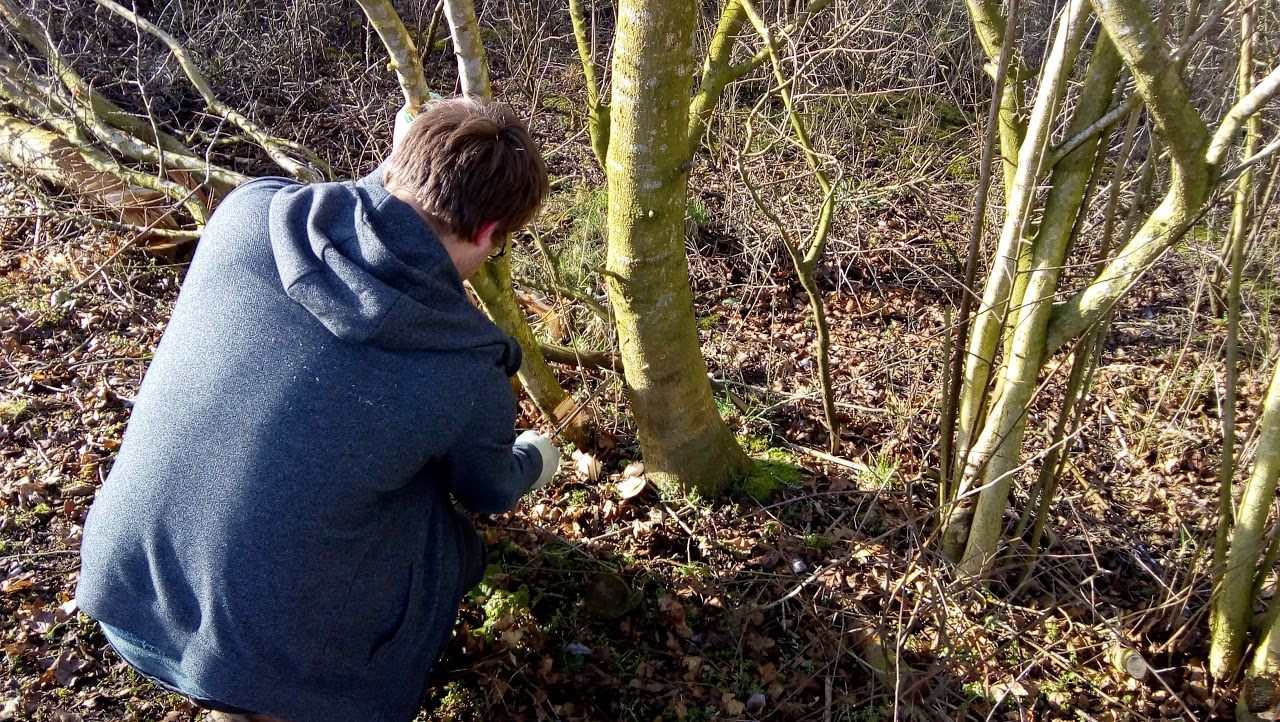
Nesscliffe Volunteers meet on the 1st Sunday of the month.


