

Shropshire's Great Outdoors

Ride Shropshire Route 8: The Ratlinghope Ride

Castles, Ways and Churches

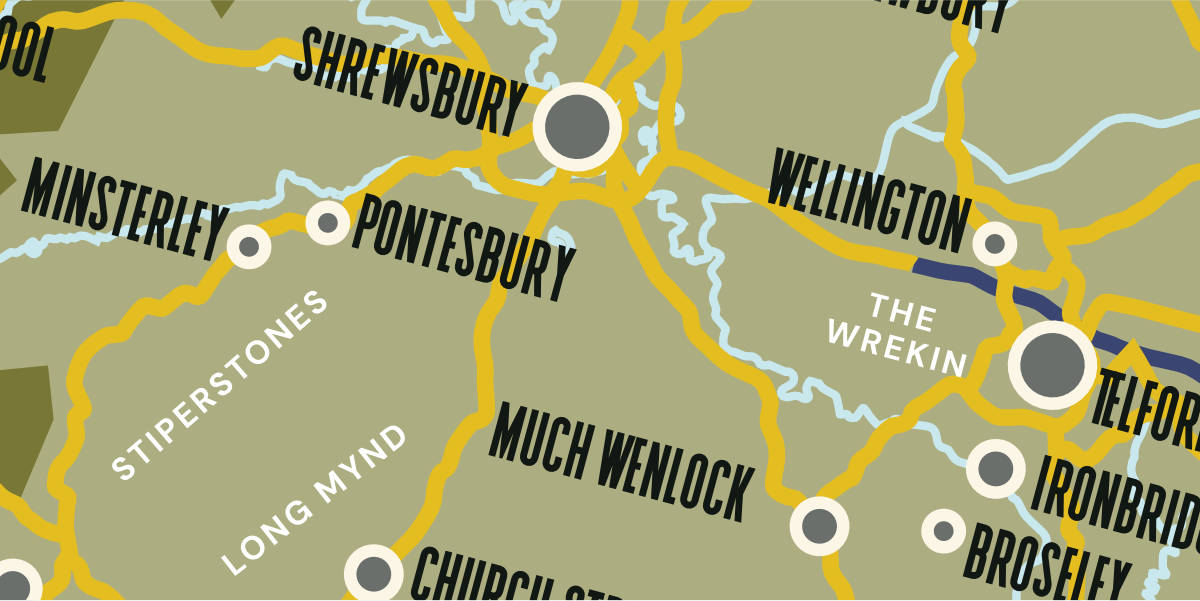
Prehistoric remains, medieval churches, one of the oldest roads in England and wonderful views of the Stiperstones and Long Mynd make this a great ride.

Whether it’s at the start or end of your ride visit St Edith’s in Church Pulverbatch see the circular churchyard; a sure sign that this was a prehistoric site.

On the ridge line above Picklescott you are on the Portway. From this ancient road you see burial mounds and on the top of Ratlinghope Hill, to the south, the earthworks of the Bronze Age castle ring. All signs of Man’s work 3000 years ago.

In medieval times these hilltop ways and tracks were used as drover’s roads to drive herds of Welsh cattle to market. They used the hilltop routes to avoid toll roads in the valleys and be gentler on cattle’s feet. Long distances walked on paved roads meant they had to be shod!

The church in Ratlinghope village also has ancient origins. In the 12th century there was a cell of Augustinian monks here. The original church has gone and the one you see was rebuilt in 1788.

But a warning! Don’t ride here in the failing light of the evening! Many have seen a ghostly funeral procession travelling this stretch of road. As you drop back down into Pulverbatch at the end of the ride make time to see the motte and bailey. One of the best preserved in Shropshire and a fitting end to a wonderful ride.

River Onny

The river Onny flows along the picturesque valley between the Long Mynd and the Stiperstones. The river begins as two tributaries, the West and the East Onnys. Each tributary is associated with abundant wildlife with sightings of otters becoming more common.

The Long Mynd

Even today the weather on these hills can take you unawares.You may get to hear the tale of the Reverend Carr, who set out from Ratlinghope Church on a winters evening in 1865. He got lost in the snow and spent the night in freezing temperatures wandering around the hillside. Fortunately he survived and recorded his experiences in a book called “A Night in the Snow”.

Blue Remembered Hills

Although he had no intimate knowledge of the county, A.E.Housman (1859 -1936) wrote about Shropshire in his collection of poems ‘A Shropshire Lad’. As a boy he had first seen the distant hills from his home in Worcestershire and this inspired him to write nostalgically of those ‘blue remembered hills’.

Ride directions

  1. Step 1

    Turn right out of Church Pulverbatch Village Hall car park and follow the road for approximately 200m.

  2. Step 2

    Take the hedged lane on your left and follow it for ⅔ mile (1km) passing through stream and continuing uphill to road.

  3. Step 3

    Turn left uphill to Wilderley Hall Farm.

  4. Step 4

    Turn right immediately after the farm following a stoned track uphill to gate which leads into a large field. Keeping the fenceline on your left continue uphill to a gate.

  5. Step 5

    Cross the lane, through the gate and keep left following the hedgeline which takes you down to a wicket gate. Continue uphill to gate onto a stoned track. Turn right and follow the track for 1 mile (1.5km) down to the road.

  6. Step 6

    At road junction turn right for ⅓ mile (0.5km).

  7. Step 7

    Turn left onto Sallins Farm drive then left again through gate onto track and follow this up to cottage.

  8. Step 8

    Continue ahead uphill towards lone trees then bear diagonally left across field to wicket gate.

  9. Step 9

    Turn right along the tarmac lane, The Portway, for ⅔ mile (1km) to the road.

  10. Step 10

    Turn left for ⅔ mile (1km) past the Threshholds Centre.

  11. Step 11

    Turn left onto stoned track and follow this through a series of gates for ⅔ mile (1km) going through a ford at Lower Darnford Farm.

  12. Step 12

    On reaching the road turn right to the village of Ratlinghope.

  13. Step 13

    Turn right on bend before church. Pass house, ford stream and follow track over Ratlinghope Hill.

  14. Step 14

    Take care crossing this road as you turn left then right onto the drive to Near Gatten Farm. At the farm keep the barns on your left and go straight on along a stoned track which takes you over the hill, through Far Gatten and out to the road.

  15. Step 15

    Turn right and stay on gated road through Gatten Lodge past two cattle grids for 1¾ miles (3km).

  16. Step 16

    Turn right off road onto track beside cattle grid and follow byway through gates for ⅔ mile (1km) to the road.

  17. Step 17

    Turn right then almost immediately left onto byway which you follow for 1¾ miles (3km) to Pulverbatch.

  18. Step 18

    Join road and go straight ahead to the White Horse. Turn left then take right turn to Church Pulverbatch. Follow road back to parking place.

Route leaflet

PDF information may be outdated

This route leaflet may not include recent changes. Some pubs or cafes listed might have altered or closed. For the latest route details, please consult this webpage.

Privacy & cookie settings

This website uses cookies so that we can provide you with the best user experience possible. Cookie information is stored in your browser and performs functions such as recognising you when you return to our website and helping our team to understand which sections of the website you find most interesting and useful.

For more information, please view our privacy notice

You can adjust your cookie settings by navigating the tabs here. You can return to this menu to adjust your options in future by clicking the cookie settings icon that appears towards the bottom of the page when viewing our site.

Strictly Necessary Cookies

Some strictly necessary cookies are required for our site to function, and therefore can not be disabled.

Additionally we use a GDPR compliance cookie to remember the preferences you set here. You can disable this cookie below, however you will be asked to set your cookie preferences every time you visit a page on this site.

Third-party services

This website uses Google Analytics to collect anonymous information such as the number of visitors to the site, and the most popular pages.

Keeping this cookie enabled helps us to improve our website.