
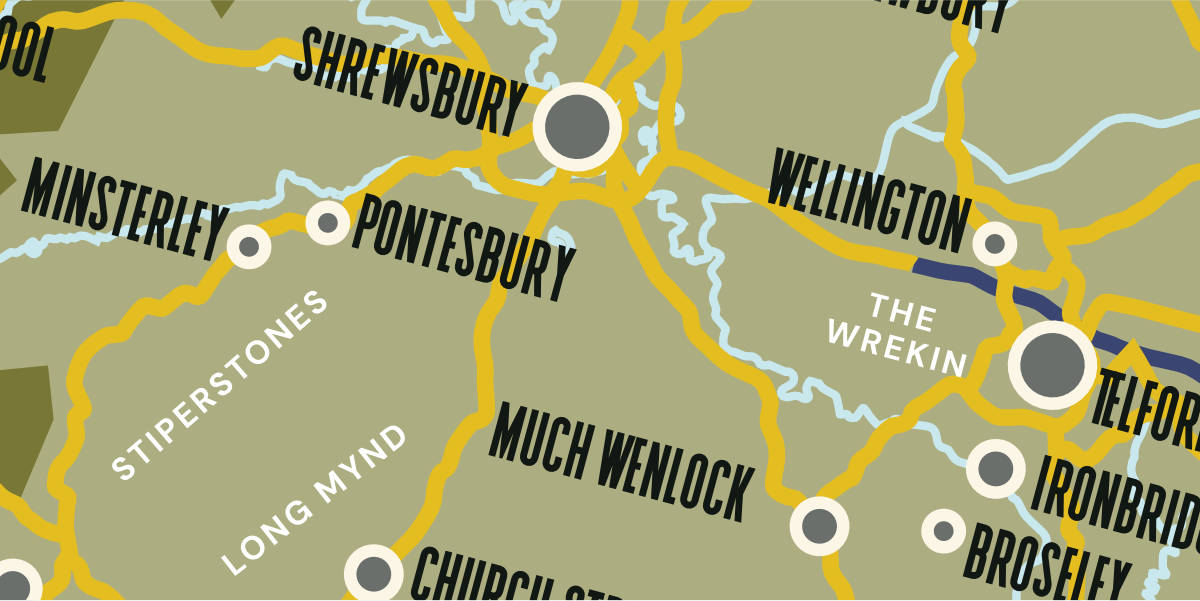


The historic town of Much Wenlock has much to offer with shops, restaurants and pubs to refresh the weary walker. In the town museum you can learn where to find fossils and the social history of the town from the arrival of the Romans in the 1st century through to the Victorians. And of course how the town inspired the birth of the modern Olympic Games.
Wenlock Priory
The tranquil ruins of Wenlock Priory stand in a picturesque setting on the fringe of beautiful Much Wenlock. An Anglo-Saxon monastery was founded here in about 680 by King Merewalh of Mercia, whose abbess daughter Milburge was hailed as a saint. Her relics were miraculously re-discovered here in 1101, attracting both pilgrims and prosperity to the priory.
Much Wenlock Windmill
The windmill is one of the best-loved landmarks of the town and is listed in the survey of the manor prepared for Sir John Wynn of Gwydir in 1714 when he bought the Much Wenlock estate from Viscount Gage. On the death of Sir John Wynn in 1719 the Wenlock Estate passed to his cousin sir William Watkins Wynn of Wynnstay.
The “world famous Wenlock Limestone outcrops” are amongst “Britain’s most important geological sites”. The limestone quarries in the North “demonstrate the best examples of reef development during the Silurian Period in Britain.” Many species of brachiopods, trilobites and ostracod (microscopic crustaceans) were first found at Wenlock and most of the known Wenlock group Silurian fauna comes from here. Richard Corfield also gave Wenlock edge as an example of the most spectacular reef building the world has ever known.
The reef was formed in shallow subtropical seas about 425 million years ago when the area was south of the equator at about the same latitude as the Seychelles is today. A walk by a BBC journalist in 2008 found abundant fossilised crinoids (sea lillies) and brachiopods.