Places of interest:
Meres and Mosses
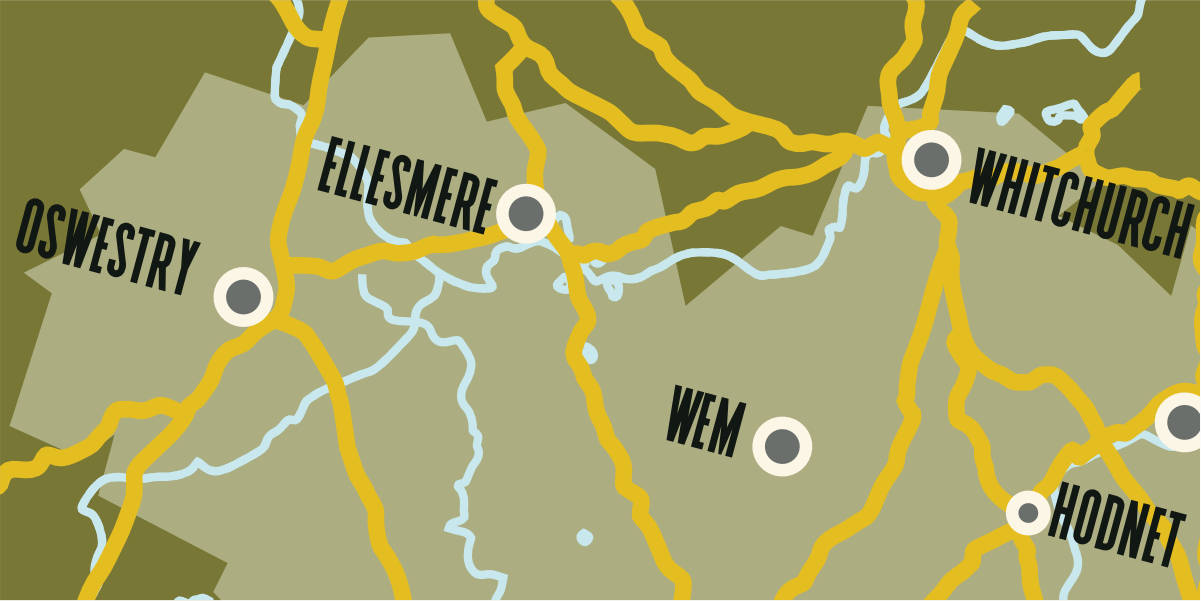
The area between Oswestry and Whitchurch is known as the meres and mosses. This unique landscape made up of pools of water and raised peat bogs was formed by glaciers retreating after the last ice age. The area is a wetland of international importance, home to many plants and insects that are rarely found elsewhere.
Ellesmere
Ellesmere is the heart of Shropshire’s ‘Lake District’ and features a delightful glacial mere which attracts an abundant amount of wildlife. This pretty town boasts medieval streets, Georgian houses and half timbered buildings, and has hosted a weekly market since originally being granted a charter by Henry III in 1221. Whilst in the town, you could take the opportunity to visit the impressive church of St Mary or stroll along the towpath of the Llangollen canal, as designed by the legendary Thomas Telford.
Colemere
Colemere is home to the second largest of the lakes/ meres in Shropshire. The mere is surrounded by extensive woodland with picnic places and a circular walk. Opposite Colemere lake is St John the Evangelist church, a mid-Victorian Gothic church. The foundation stone was laid on 3rd June 1869 and stone brought from Cefn by canal to Lyneal Wharf was used in the construction.
Welshampton
The church of Saint Michael was built in 1863 and was designed by Sir George Gilbert Scott with unusual yellow stone and a diaper pattern slate roof.
Cambrian Heritage Railways
Cambrian Heritage Railways are restoring the railway lines in the Oswestry area. The railway was first opened in 1848 and stopped running passenger services in 1966. The stations at Llynclys and Oswestry have been restored and you can take short heritage train rides at each. Find out more about the history of the railway at the Cambrian Railways Museum at Oswestry Station. www.cambrianrailways.com
Offa’s and Wat’s Dyke
Just east of Oswestry, Offa’s Dyke meets Wat’s Dyke, another 8th century defensive earthwork, which is evidence of the long history of skirmishes over land along the Welsh/English border.
Oswestry
Oswestry is an ancient market town located on the English/Welsh border, nestled in the foothills of the Welsh hills. Its position as a frontier town has given it a turbulent history, still visible in the encircling English and Welsh town walls and the foundations of the castle, which date back to 1086.
Canals
Another significant feature of the landscape in north Shropshire is the canals which traverse the countryside. The Llangollen Canal runs from Llangollen to Ellesmere and on to Whitchurch where it joins the Shropshire Union Canal. The canal was constructed in the first half of the 19th century. The canal is open for leisure use and is very popular with holidaymakers.