

Shropshire's Great Outdoors

War Walks on the Home Front: Much Wenlock

War Walks: Wenlock Goes to War

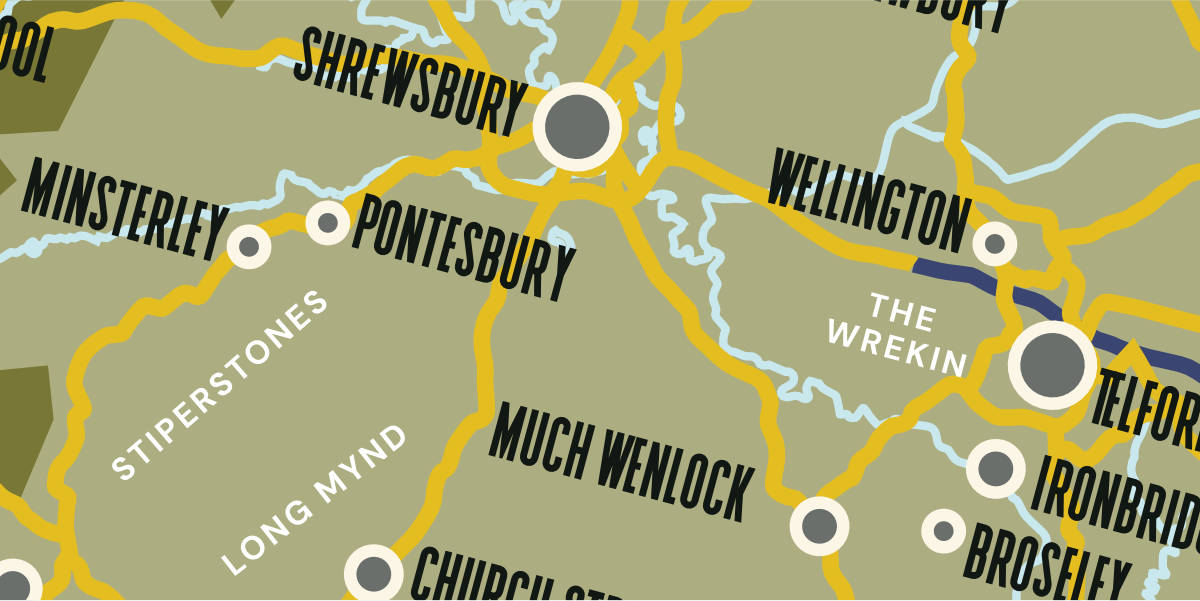
An easy 3.5 mile circular walk through the town of Much Wenlock, along a stretch of the old railway line and out to the disused Farley Quarry, then back to the town.

1914 the railway played a vital role in Much Wenlock’s economy. Not only did it carry passengers but it moved animals to market, limestone to the furnaces, soldiers to the front and then brought wounded men back to the military hospital. But already life was changing. Most stone quarries had closed as demand for fluxing stone for the local iron industry dwindled. The requirement for men and horses at the front virtually finished off an already ailing limestone industry. Although a few of the larger quarries did reopen after World War I, their heyday had passed.

Near the start of the walk is where the railway to Craven Arms left Much Wenlock, and the right hand abutment has long since been demolished to allow the widening of the main road. The line from Much Wenlock to Craven Arms opened in 1867, and connected the town with the extensive quarry workings at Presthope, which had their own sidings.

Shadwell Quarry

Shadwell Quarry which was active in 1914, and had its own railway siding. Wenlock limestone was extracted mainly for use in the iron smelting furnaces in Coalbrookdale, Horsehay, Lightmoor, Madeley Wood and the Black Country. Shadwell Quarry was owned in 1914 by the South Wales and Cannock Chase Coal and Coke Company who supplied fluxing stone to the Madeley Wood Ironworks, but already the market for stone was falling away and the quarry soon closed down. It did reopen later, but finally closed in the mid 1980s.

Tomlins (or Tomlinson’s) Hills Quarry

This quarry opened in 1745. It never had a rail connection, but the path that you follow is on the line of an old tramway or plateway built in 1827 to take stone away. The quarry was abandoned in 1900.

Farley (formerly Gleedon) Quarry

First records of quarrying here go back to 1728. A gravity tramway existed in 1824 to carry the stone to  Buildwas, but prior to that stone was carted to the furnaces in Horsehay. The quarry closed in 1901, but was temporarily reopened in 1937 and 1947.

Lady Forester Hospital

Lady Forester Hospital received its first patients in 1903. Matron Smith was in charge in 1914. She had ten female staff, and 43 beds were made available for military patients, many of whom were brought in to Wenlock by train. During WWI 963 patients were treated here, and an illuminated certificate hangs inside the hospital to acknowledge this.

Walk directions

  1. Start

    From The Square, with the clock behind you and the museum on your right, go up the High Street until you come to the Gaskell Arms Hotel. Cross Smithfield Road and go along an elevated pavement until you come to a large stone bridge abutment on the left.

  2. Step 2

    Turn right into Southfield Road and on your right is where the single line track bed once ran, but is now developed into the Pinefields housing estate. After 200 metres you will come to a bridge on your right.

  3. Step 3

    Continue along Southfield Road.

    Here the goods yard and loco shed would be on your right . In 1914 this would have been bustling with the movement of animals and agricultural produce.

  4. Step 4

    Keep going straight on and into a narrow alley, and at the far end is Sheinton Street. Cross over and go to the right where another stone bridge abutment exists. Cross Station Road to read the information board entitled ‘The Embankment’.

  5. Step 5

    Now go into Station Road and turn right up the steps onto the embankment. You are now on the railway track bed. Turn left and walk along it until faced with a hedge. A gap to the right reveals the railway station.

  6. Step 6

    Go back onto Station Road and turn right past the old station and though the gates commemorating the Wenlock Olympian Games, into an avenue of lime trees planted by Dr William Penny Brookes, the founder of the Games. After 20 metres, turn right at a gate and down the bank onto the track bed, and then turn left to walk along it. Follow the track bed for about 400m and then veer left onto a footpath which ramps up from the track bed. The path emerges close to the Gaskell Field, next to the avenue of lime trees. Bear to the right for 50m, following the path along the foot of Windmill Hill and at the gateway, bear right up the hill and go to the fence at the top where you overlook the quarry.

  7. Step 7

    Follow the line of the fence past the windmill tower, and go through a kissing gate, down through the copse to the main road. Turn right onto the pavement, and after about 150 metres cross the road into a lane. Go past Windmill Cottage, ignoring the stile on the left adjacent to it, and after 30 metres along the lane look for another stile in the hedge on the left without a bottom step, and go over it.

  8. Step 8

    Keep following the path until you meet another path and go right until you come out onto a lane. Turn left and walk on past a waymarked stile on the right until you come to a second stile on your right. Go over into the woods and follow the path for 200m until you catch a glimpse of Farley Quarry. In 1914 this was known as Gleedon Quarry.

  9. Step 9

    Retrace your steps to the lane and back over the stile turning left. Follow the lane, and when you come to a fork bear right and back to the main road. Cross the road to regain the pavement and go right heading towards the town. Go past the school on your left, when you will see a sign across the road announcing Lady Forester and Foresters Court. Cross the road into the hospital grounds.

  10. Step 10

    Regain the path on the main road and head back into the town. On reaching the bridge abutment, bear left along Sheinton Street back to The Square.

Route leaflet

PDF information may be outdated

This route leaflet may not include recent changes. Some pubs or cafes listed might have altered or closed. For the latest route details, please consult this webpage.

Other nearby walks

Privacy & cookie settings

This website uses cookies so that we can provide you with the best user experience possible. Cookie information is stored in your browser and performs functions such as recognising you when you return to our website and helping our team to understand which sections of the website you find most interesting and useful.

For more information, please view our privacy notice

You can adjust your cookie settings by navigating the tabs here. You can return to this menu to adjust your options in future by clicking the cookie settings icon that appears towards the bottom of the page when viewing our site.

Strictly Necessary Cookies

Some strictly necessary cookies are required for our site to function, and therefore can not be disabled.

Additionally we use a GDPR compliance cookie to remember the preferences you set here. You can disable this cookie below, however you will be asked to set your cookie preferences every time you visit a page on this site.

Third-party services

This website uses Google Analytics to collect anonymous information such as the number of visitors to the site, and the most popular pages.

Keeping this cookie enabled helps us to improve our website.