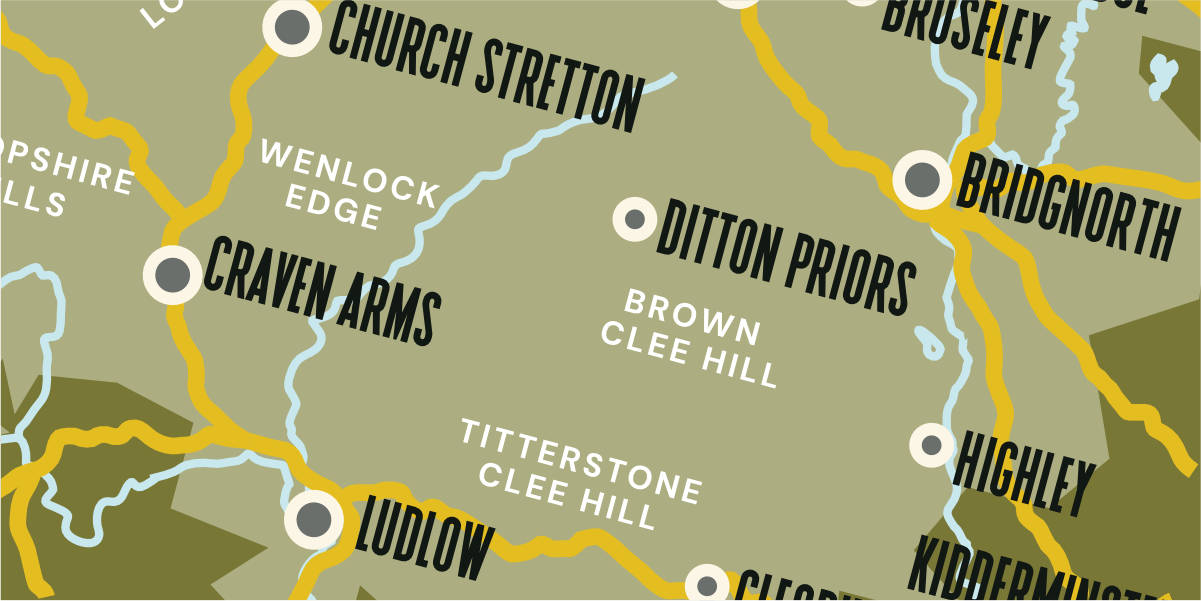
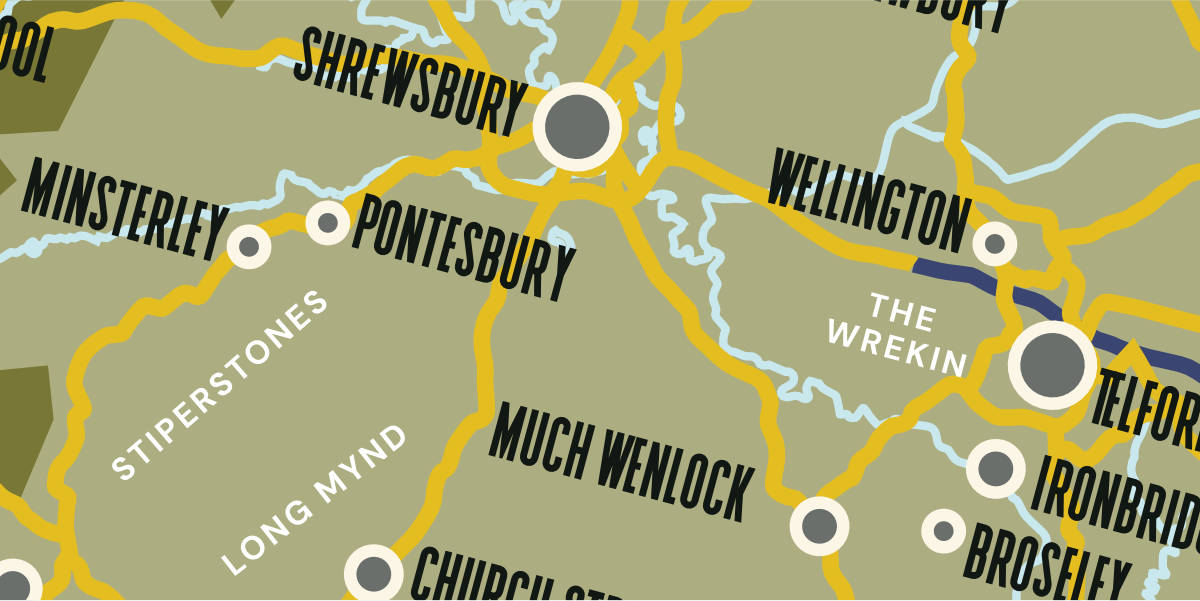
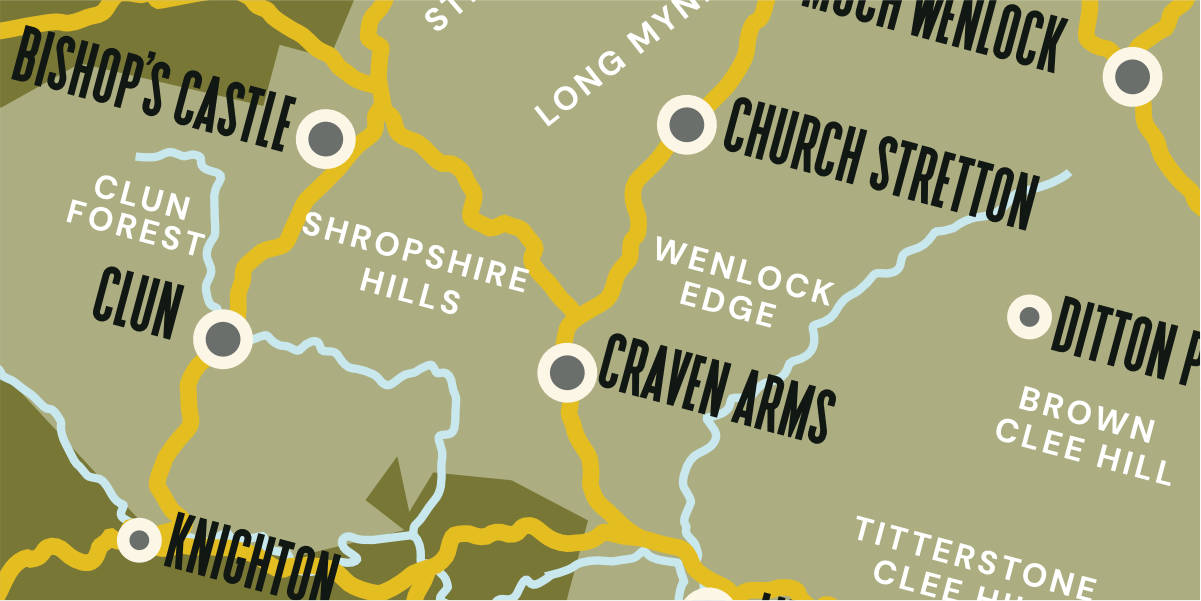
Continue on along the pavement to a major road junction, and cross over to the Gaskell Arms Hotel and Restaurant to turn left along the footpath. Follow the main road round to the right. When you reach a filling station on the left, turn right through a gate into a wide grassy lane. This takes you into a field. Go straight on through a kissing gate, and turn left up an old tree lined drovers track. This opens out into a field at the top where you go straight on with a hedge on your left. Go through a small clump of trees to where the path opens out onto a large field from which point you have a superb panoramic view of the South Shropshire countryside dominated by Brown Clee Hill.
Much Wenlock lies behind you out of sight in a hollow. Ahead lies the hamlet of Callaughton, again in a hollow and out of sight. In 1914 the De Troetsel family, refugees from Antwerp, were housed on a farm in Callaughton, and remained until the end of the war in 1918.
All this area was intensively cultivated by manual labourers in 1914, with only occasional assistance from a steam traction engine. Horses provided most of the power for the heavy work and haulage.
By 1915 it was becoming clear that the German army was unlikely to be defeated in a matter of weeks. To break the deadlock of trench warfare huge reinforcements were needed. The National Service Act of 1915 was designed to identify the numbers, ages, and trades available in the population across the nation.
The Derby Scheme in October 1915 asked all males between 18 and 40 to enlist or register for call-up ‘if required’. By December 1915 over 2 million potential or actual recruits had been identified. Most remained potential, so it took the Military Services Act of March 1916 to make enlistment into the services compulsory. Eligible men were given two weeks notice by letter, accompanied by a rail warrant instructing them where to report for military training.
Those who claimed exemption had to go before a tribunal of 7 men at the Guildhall representing the Military and the Agricultural Board. Few escaped the call-up, but some were granted time to get the harvest in before leaving for war. At the same time large numbers of horses were being requisitioned for the front, causing great difficulties for those trying to bring in the harvest.
Farmer John Myatt ran Perkley’s Farm over on the right, throughout WWI. He was just one farmer in the area trying to feed the nation while his work force and horses were being depleted. The farmhouse and buildings now lie derelict. Women began to be trained to do agricultural work, and Wenlock’s first qualified woman, Mrs Bridgwater, was presented with her armband in 1916.