

Shropshire's Great Outdoors

Gough Walk 4 – Scoggan, the scoundrel from the goblin hole

Make for Myddle's mysterious goblin hole

A 4.5 mile circular walk from Myddle church down lanes and across fields affording views of Myddle Hill, Jolloway Hill, Harmer Hill and Pimhill and taking in the sandstone outcrop and cave of Goblin Hole.  On this walk you will also see the remains of Myddle Castle, once home to the infamous Highwayman Humphrey Kynaston.

To see a video of a step by step guide to this walk please follow this link.

Richard Gough

Richard Gough was a yeoman farmer who lived in the Shropshire village of Myddle in the 17 and 18th Centuries and left his mark on the world by writing about his Parish and the people that lived in it.  His book was written in two parts, the first part, entitled Antiquities and Memoyres of the Parish of Myddle and the second, Observations concerning the Seates in Myddle and the Families to which they belong.  The book is incredibly unique and arguably one of the most valuable sources for social studies of the 17th and early 18th centuries.

Myddle

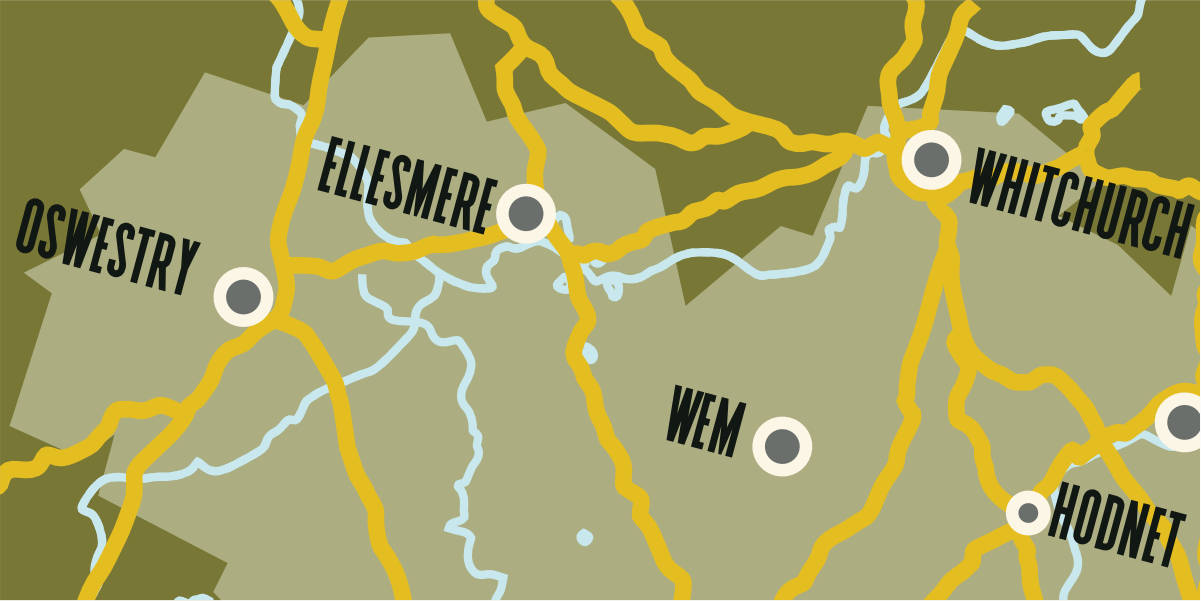
Originally a Saxon settlement, the village of Myddle lies in a hollow, just off the main Shrewsbury to Ellesmere road, 10 miles north of Shrewsbury.  Although famous for its resident Richard Gough, Myddle was also the home of its infamous son Highwayman Humphrey Kynaston.

Humphrey Kynaston

‘Wild’ Humphrey Kynaston, was an English highwayman who operated in the Shropshire area.  The son of the High Sheriff of Shropshire, he was convicted of murder in 1491.  After being outlawed, he moved into a cave in the area and lived a ‘Ronin Hood’ lifestyle.

Myddle Castle

Myddle Castle was built around 1307 as a home for Lord L’estrange of Knockin.  The castle passed from the L’estranges to the Derbys who placed castellans or caretakers there while they lived elsewhere. Humphrey Kynaston, the last custodian, allowed his personal debts to mount so high that he had to flee the area.  The castle was abandoned and soon began to deteriorate.  All that remains today is a stair turret at the north east corner, where parts of former window and door frames can be seen.   The rectangular outline of the castle is still visible on the ground, and part of the moat remains.  The castle is sited on land owned by Castle Farm, but can be seen from the main road through Myddle, and from public footpaths around the farm. There is no access to the Castle itself.

St Peter’s Church, Myddle 

One of the oldest buildings in the village, it is thought to have had Saxon origins and it is mentioned in the Domesday Book. There is apparently evidence of some Norman walling in the tower.


Walk directions

  1. Start

    Start at Myddle Church and walk up the road. 150 metres after the last house turn left down Fenemere Lane.

  2. Step 2

    When the lane turns sharp right, follow the lane to the thatched cottage called the Oaks, and then return to this corner. Now go down the green lane just over 1/2 mile to Hollins Farm.

  3. Step 3

    Opposite the drive to the farm there is a gate to a bridleway on your left. Follow the bridleway across two fields until you meet a farm lane that takes you to Webscott Farm and out onto Webscott Lane.

  4. Step 4

    The footpath goes straight ahead through one or two small fields, coming out on the Lower Road opposite an old cave, known as the Goblin Hole.

  5. Step 5

    Turn left and carry on along the road to Myddle passing more sandstone cottages and the entrance to the modern quarry.

  6. Step 6

    When the road begins to climb, take a stile by a gate on your left (there are two stiles into this field, please take the second one).

  7. Step 7

    Head for the farm crossing a little bridge over Myddle Brook joining two fields. To the left of the farm buildings you will see the remains of Myddle Castle, but the right of way takes you to the right of the farm and then past the buildings to the church.


Gough Walk 4 - Scoggan, the scoundrel from goblin hole

PDF information may be outdated

This route leaflet may not include recent changes. Some pubs or cafes listed might have altered or closed. For the latest route details, please consult this webpage.

Privacy & cookie settings

This website uses cookies so that we can provide you with the best user experience possible. Cookie information is stored in your browser and performs functions such as recognising you when you return to our website and helping our team to understand which sections of the website you find most interesting and useful.

For more information, please view our privacy notice

You can adjust your cookie settings by navigating the tabs here. You can return to this menu to adjust your options in future by clicking the cookie settings icon that appears towards the bottom of the page when viewing our site.

Strictly Necessary Cookies

Some strictly necessary cookies are required for our site to function, and therefore can not be disabled.

Additionally we use a GDPR compliance cookie to remember the preferences you set here. You can disable this cookie below, however you will be asked to set your cookie preferences every time you visit a page on this site.

Third-party services

This website uses Google Analytics to collect anonymous information such as the number of visitors to the site, and the most popular pages.

Keeping this cookie enabled helps us to improve our website.