
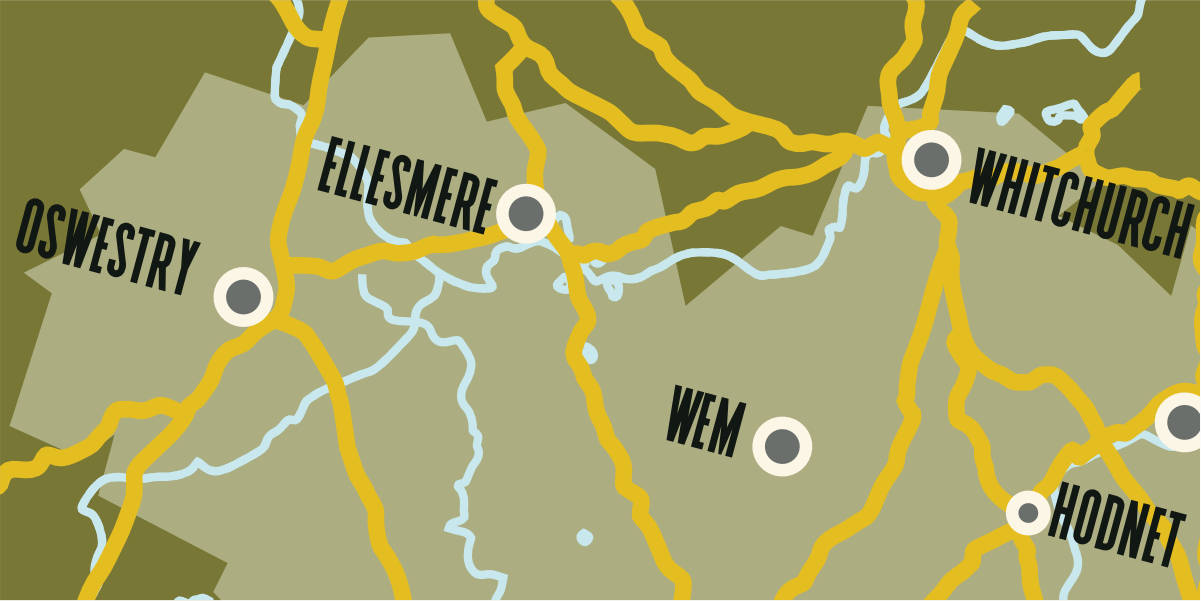


This level circular walk from Whitchurch town centre explores the surrounding countryside and heritage, taking in Brown Moss nature reserve, an internationally important wildlife site.
William Joyce – clock man
William Joyce began making longcase clocks in the North Shropshire village of Cockshutt. The family business, eventually known as JB Joyce, was handed down from father to son and in 1790 moved to High Street, Whitchurch, Shropshire. By 1834 Thomas Joyce was making large clocks for local churches and public buildings. In 1849 the company copied the escapement mechanism used in Big Ben and went on to make large clocks for many public buildings both home and overseas – notably the clock in the Shanghai Customs House.
Brown (not green) Moss
Brown Moss is one of Shropshire’s most interesting nature reserves with over 200 species of wild plants including the rare floating water plantain. Great crested newts are just one example of the fantastic variety of wildlife that live amidst its marshes, pools, heath and woodland. In the late spring/early summer large numbers of froglets can be seen making a mass exodus from the pools.
Brown Moss is designated as a Site of Special Scientific Interest, a Special Area of Conservation, and a Ramsar site – a wetland of international importance named after a treaty signed in Ramsar, Iran.